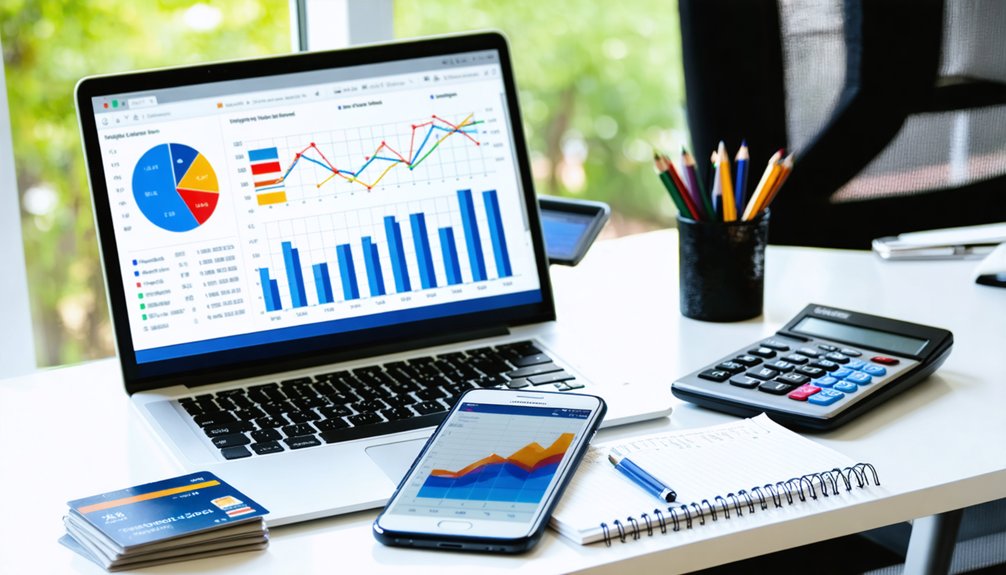


Budget planning after using bill pay loans begins by listing each loan balance, APR, minimum payment, and payoff timeline. Next, calculate true monthly take-home pay after taxes and deductions, then map every bill by amount and due date on a calendar. Compare essentials against income to find disposable cash for extra debt payments. Cut low-value spending, assign extra paychecks to savings or high-interest balances, and review the budget monthly. The steps below make each part easier to manage.
Calculate Your Bill Pay Loan Debt
Start by listing each bill pay loan and any related balances, then enter the current amount owed, APR, and minimum monthly payment into a payoff calculator. This establishes a reliable baseline using standard amortization logic, where payments cover interest first before reducing principal each cycle. A longer repayment period can lower the monthly payment while increasing the total interest paid over time.
If balances carry different terms, each loan should be calculated separately to reflect the true interest rate and payoff timeline accurately. This is important because separate calculations are needed for debts with different rates to produce more reliable payoff estimates.
The calculator should then be used to compare outputs such as total interest, debt-free date, and estimated monthly payment. A strong repayment strategy often prioritizes the highest-rate balance first, while a debt snowball comparison can test motivation benefits. Using the debt avalanche method can reduce total interest costs by directing extra payments to the highest-rate balance first.
This process also supports cash flow analysis, financial goal setting, and awareness of possible credit score impact as balances decline over time steadily.
Figure Out Your True Take-Home Income
Once total bill pay loan obligations are clear, the next step is to determine true take-home income, since repayment plans only work when they are based on the amount actually available after deductions.
This means using net pay, not gross earnings. Gross pay minus federal withholding, FICA taxes, state or local taxes, pre-tax benefits, and post-tax deductions equals the amount actually available. Pay frequency also affects planning, because bi-weekly pay typically results in 26 paychecks per year. For a $94,380 salary, California take-home pay is about $5,788 per month after taxes, which gives a useful net pay benchmark.
Federal withholding depends on W-4 details, filing status, dependents, and 2026 Tax brackets. Social Security and Medicare also reduce each check, while 401(k), health insurance, and HSA contributions change taxable income.
Employees, freelancers, and contractors all benefit from this calculation. Pay frequency and location matter too; Tennessee workers keep more because salary income faces no state tax. However, remote work for an employer in another state can still create out-of-state taxes depending on that state’s rules. Accurate net-income planning supports steady repayment and protects Credit scores overall.
List Every Bill and Due Date
A complete bill list should include every fixed and recurring obligation, along with its exact due date, payment method, and account details.
This inventory should cover rent or mortgage, utilities, groceries, cell phone, internet, insurance premiums, transportation, healthcare, credit cards, and loan payments, including student, auto, personal, and buy now, pay later plans. Housing is often the largest monthly obligation, with housing costs accounting for about 33.3% of total household spending.
It should also include property taxes, maintenance, childcare, pet costs, subscriptions, memberships, tolls, parking, and tuition.
Bill timing matters, so each item should be marked monthly, quarterly, or semi-annually. A bill tracker keeps all payment details in one place, making it easier to monitor multiple due dates and avoid late fees.
A checklist or printable due date calendar can record remittance addresses, scheduled payment dates, and paid status to prevent missed or duplicate payments. Using a free printable template in PDF, Word, or Excel format makes it easier to customize and update this information in one place.
Payment alerts, whether digital or paper based, help households stay organized and maintain control during repayment recovery after financial strain.
Find Disposable Income After Essentials
How much income remains after taxes and essential bills are covered determines what can realistically go toward recovery after using bill pay loans. Disposable income starts with gross pay, then subtracts federal, state, and local taxes plus mandatory deductions such as Social Security and Medicare. What remains is disposable income, not discretionary income. Disposable income determines financial flexibility when deciding how much can go toward savings, debt repayment, or occasional non-essential spending.
Next, essential costs are removed: rent or mortgage, groceries, utilities, transportation, health insurance, medications, and personal care. The result shows what is truly available each month after necessities. For example, $3,000 in monthly income minus $500 in taxes leaves $2,500; if essentials total $2,000, then $500 remains. That figure guides debt repayment, protects an Emergency fund, and helps prevent missed payments that could damage a Credit score over time. In bankruptcy situations, courts may review this remaining amount through a means test to determine repayment ability.
Choose Budget Planning Tools That Simplify Tracking
Which budget tool works best depends on the level of detail required and how consistently expenses must be tracked after using bill pay loans.
For personal use, Simplifi helps households monitor accounts in real time, categorize transactions automatically, and receive alerts before spending drifts. Its dashboards support visual tracking, making patterns easier to understand and discuss. Many expense tracker apps also improve accuracy through real-time sync, giving users a clearer view of where money is spent and why.
For shared household budgeting, Goodbudget offers envelope budgeting with synchronized access across devices, helping members stay aligned on limits and goals. Its envelope budgeting system can also replace a family planner, worksheet, or spreadsheet for everyday budget coordination.
Small business owners may benefit from FreshBooks or QuickBooks Online, which import bank activity, categorize expenses, and support reporting across platforms. Tools with real-time visibility can also help owners make proactive spending decisions before small issues grow into larger budget problems.
Expensify fits more complex business needs through mileage tracking, reimbursements, and policy controls.
The strongest choice is the one that reduces manual work, increases consistency, and keeps everyone confidently informed daily.
Build a Bill Pay Loan Budget Calendar
When building a bill pay loan budget calendar, the first step is to list every recurring obligation, including rent, utilities, subscriptions, insurance, and all bill pay loans. Each entry should show due date frequency, minimum payment, balance, interest rate, and any annual charges. A spreadsheet or printable tracker keeps the full view visible and organized. A printable PDF bill pay calendar can make this process easier by offering a simple, reusable monthly layout for tracking due dates and payments.
Next, due dates should be mapped on a monthly calendar and reviewed against income timing for clear cash flow awareness. High-interest loans deserve early placement to reduce added costs and protect Credit score. Payment status, confirmation numbers, and updated balances should be logged after every transaction. Color-coding can reveal overlaps, pending items, and progress. Monthly reviews help adjust for income changes, track goals, and note possible Tax deductions tied to qualifying expenses or records.
Split Your Budget by Paycheck
A paycheck-based budget starts by calculating the exact take-home amount from each pay period after taxes and deductions, then matching that income to bills and expenses by due date.
This method organizes monthly obligations into manageable paycheck groups. Bills due in the first half of the month are assigned to Paycheck #1, while later obligations go to Paycheck #2. For biweekly income, each bill can also be split in half, with equal amounts reserved from both paychecks. Variable costs, such as groceries or utilities, are averaged to support steadier cash flow. If cash‑day timing creates pressure, due dates may be adjusted with providers to balance each group. In three‑paycheck months, the extra check can begin the next cycle or strengthen savings. This structure helps households stay current and feel in control together.
Use the 50/30/20 Budget After Bill Pay Loans
Apply the 50/30/20 budget to restore structure after using bill pay loans. First, total all after-tax income from wages, retirement, investments, or rentals. Then assign 50 percent to essential costs: housing, utilities, groceries, transportation, insurance, healthcare, childcare, and minimum debt obligations. This creates a reliable baseline the household can follow together.
Next, place 30 percent into wants, including dining out, entertainment, hobbies, clothing, and leisure. Direct the remaining 20 percent toward savings, retirement, emergency reserves, and extra debt reduction. Separate accounts or automatic transfers can simplify this system and reduce overspending.
If needs exceed 50 percent, adjust temporarily by shrinking wants, reviewing housing or utility costs, or exploring debt consolidation. Consistent budgeting supports stability, progress, and a healthier credit score over time for everyone.
Prioritize Bill Pay Loan Payments First
After a bill pay loan has been used, repayment should move to the top of the budget alongside core necessities.
Housing, utilities, groceries, transportation, and insurance remain first to protect daily stability, but the loan should be treated as an immediate priority within that structure.
Minimum payments must be made on all debts to prevent fees and credit damage, while extra funds should target the highest-interest balance first.
This approach limits total interest and helps restore financial standing.
Credit cards, payday loans, and personal loans generally require faster attention than lower-rate student debt.
If the bill pay loan creates strain, creditors should be contacted early for hardship options or revised terms.
Credit counseling can support a workable plan.
Once balances stabilize, a small Emergency fund can help the household stay aligned.
Cut Spending to Free Up Cash
Even small spending cuts can create the cash needed to keep a bill pay loan on track.
A practical first step is Mindful spending through one to two months of real expense tracking using bank tools, Quicken, or Mint.
Categorizing actual purchases helps reveal easy cuts, such as vending snacks, takeout, or unused subscriptions.
Frugal habits then turn those findings into steady savings.
Households can cancel low-value memberships, trim cable or streaming bundles, and ask about discounts.
Preparing meals at home, using grocery lists, buying in bulk, and skipping drive-throughs can quickly lower food costs.
Shopping secondhand, using community resources, and choosing free activities also reduce pressure.
Regular reviews of utilities, phone plans, and insurance can uncover lower rates, freeing more cash for essential bills each month.
Use Extra Paychecks to Rebuild Savings
When a third paycheck or other “extra” deposit arrives, it can serve as a fast way to rebuild savings instead of disappearing into routine spending. A practical first step is sending it automatically to a separate high-yield savings account, where interest can add modest growth while reducing the temptation to spend. Building an Emergency fund of three to six months of expenses helps restore stability after relying on bill pay loans.
If urgent savings are already underway, extra paychecks can also strengthen longer-term security. Some households use them to pay down highest-APR debt, reducing interest costs and improving credit utilization. Others direct part of the deposit toward a Retirement boost through increased 401(k) contributions or an IRA. Immediate transfers keep progress consistent and help households feel more secure, prepared, and connected to shared financial goals.
Track Your Budget and Adjust Monthly
A budget becomes more effective if it is tracked consistently and adjusted each month to match actual spending. Expenses should be grouped into needs, wants, and savings, with minimum bill pay loan payments treated as needs and extra debt payments counted toward the cash goal. Budgeting apps can automate tracking, show trends, and set realistic spending limits.
A weekly review helps confirm bills are paid and spot overspending early. Daily transaction checks through bank accounts keep records accurate and reinforce control. Monthly recaps should compare spending patterns, including weekday versus weekend habits, then reallocate money from wants to priorities when needed. Aligning payments with paydays and setting alerts before due dates improves consistency. Over time, steady tracking supports debt reduction, stronger savings habits, and a healthier credit score overall.
References
- https://www.usccreditunion.org/learn/blog/budgeting-your-best-partner-when-in-debt/
- https://usaloansearch.com/planning-monthly-budgets-after-using-bill-pay-loans/
- https://www.finedgecu.org/blogs?blog_id=91
- https://www.equifax.com/personal/education/debt-management/articles/-/learn/pay-bills-to-catch-up-when-behind/
- https://www.creditdirect.com/blog/ways-to-use-a-personal-loan-to-catch-up-on-bills/
- https://www.consumerfinance.gov/about-us/blog/budget-help-manage-your-monthly-expenses-bill-calendar/
- https://www.peachstatefcu.org/blog/the-power-of-paycheck-and-half-payment-budgeting
- https://www.firstmid.com/articles/how-to-create-a-debt-payoff-plan-that-fits-your-budget-and-lifestyle
- https://sunsetfinance.net/resources/basics-budgeting/
- https://www.calculator.net/debt-payoff-calculator.html